


What is a Pneumatic System? Working Principle and Components
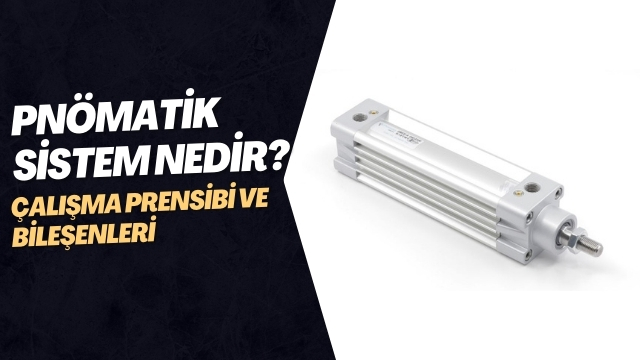
WHAT IS A PNEUMATIC SYSTEM? WORKING PRINCIPLE AND COMPONENTS
What is a Pneumatic System?
A pneumatic system is an automation system that produces motion by converting compressed air into mechanical energy. It is widely used in applications requiring linear and rotary motion in industry. Pneumatic systems operate together with pneumatic cylinders, pneumatic valves and air preparation equipment.
Compressed air is produced by a compressor and directed through control elements to generate machine motion. Due to its clean, fast and safe operating principle, pneumatic systems are one of the fundamental components of automation technology.
How Does a Pneumatic System Work?
Pneumatic systems operate in five main stages:
Air Generation
The compressor draws atmospheric air, compresses it and produces compressed air.Air Preparation (FRL)
The filter, regulator and lubricator unit removes moisture, dirt and particles from the air. At the same time, the proper pressure for the system is adjusted.Control (Pneumatic Valves)
Directional control valves determine the direction of the compressed air flow.Motion (Pneumatic Cylinder / Actuator)
Compressed air enters the cylinder and produces linear or rotary motion.Exhaust (Air Discharge)
Used air is released back to the atmosphere through a silencer.
Components of a Pneumatic System
A pneumatic system consists of the following main elements:
Compressor
Air tank
Filter – Regulator – Lubricator (FRL)
Pneumatic valves (3/2, 5/2, 5/3)
Tubing and fittings
Silencer
The correct selection of these components directly affects system efficiency and energy consumption.
Pneumatic System Working Principle (Technical)
In pneumatic systems, air is a compressible fluid. Compressed air generates mechanical motion by applying force on the piston area.
Force Formula:
F = P × A
F → Force (Newton)
P → Pressure (Bar / Pascal)
A → Piston area (m²)
For example, a cylinder with a diameter of 50 mm operating at 6 bar pressure produces approximately 1177 N of force.
Where Are Pneumatic Systems Used?
Pneumatic systems are widely used in many industries:
Machine manufacturing
Packaging machines
Automotive production lines
Food and beverage industry
Plastic and injection machines
Robotic automation systems
Conveyor and transport systems
Textile machinery
Pneumatic systems are especially preferred in applications requiring fast and repetitive motion.
Advantages of Pneumatic Systems
Clean and environmentally friendly operation
High-speed motion capability
Safe operation (suitable for explosive environments)
Simple installation and maintenance
Not damaged under overload
Cost-effective automation solution
Disadvantages of Pneumatic Systems
Does not produce as high force as hydraulic systems
Limited precision positioning
Air leaks cause energy loss
Compressor consumes energy
Pneumatic vs Hydraulic Systems
| Feature | Pneumatic | Hydraulic |
|---|---|---|
| Energy Source | Compressed air | Oil |
| Force | Medium | Very high |
| Cleanliness | Clean | Oily |
| Speed | High | Medium |
| Maintenance | Easy | More difficult |
Pneumatic System Maintenance
For long-lasting operation:
Air filter should be cleaned regularly
Air leaks should be checked
Pressure regulator must be adjusted properly
Tubing and fittings should be inspected
Lubricator level should be monitored
Frequently Asked Questions (FAQ)
At what pressure do pneumatic systems operate?
Generally between 6–8 bar.
Which is stronger, pneumatic or hydraulic?
Hydraulic produces higher force, pneumatic is faster.
Why are pneumatic systems preferred?
Because they are clean, fast, safe and cost-effective.
Do pneumatic systems consume energy?
Yes, the compressor consumes energy, but efficiency can be improved with proper design.
Conclusion
Pneumatic systems provide fast, reliable and economical automation solutions in modern industry. A properly designed pneumatic system increases energy efficiency, reduces maintenance costs and improves production efficiency. Therefore, pneumatic component selection should be done with an engineering approach.